feature
Chiang Mai: The 700-Year-Old Capital That Won't Stop
A 1,000-year-old Lanna kingdom, 300+ temples in a 1-km walled city, the food capital of the north, the staging ground for the cool-season tourist flow, and the only city in Thailand where the locals outnumber the expats.
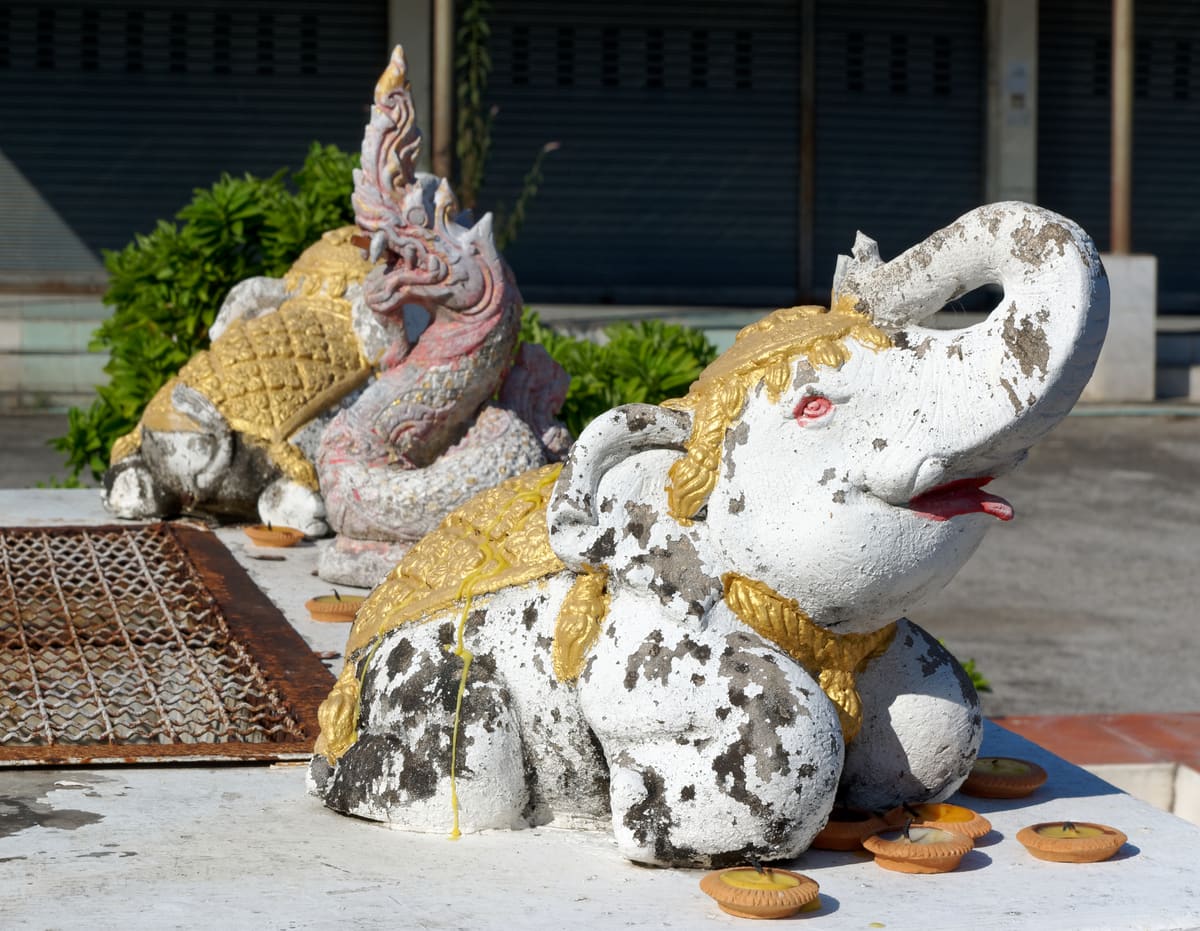
Chiang Mai is the second city of Thailand, the cultural capital, and the only Thai city where the historical depth is obvious. The Old City walls (built 1296, still standing) enclose 300+ Buddhist temples, dozens of coffee shops, half a million residents, and a 5-fold population of international visitors during the cool season.
The city was the capital of the Lanna kingdom — the "land of a million rice fields" — for 500 years (1296-1775). After the Burmese sacked it, the capital moved to Bangkok. Chiang Mai became a small backwater. It was rediscovered in the 1970s-80s by the Thai middle class, then by the international backpacker trail, then by the digital-nomad crowd, then by the Chinese tourist wave. The city has been continuously reinventing itself for 30 years and has somehow kept its character.
What to do
The temples
Chiang Mai has 300+ temples in a 1-km walled square. The must-sees:
- Wat Phra Singh: The most sacred, the Lion Buddha, the 14th-century chedi. The most visited temple in the city.
- Wat Chedi Luang: The ruined 14th-century chedi (damaged by a 1545 earthquake, never rebuilt). The most photogenic ruin in the city. The monk-chat program (talk to a Buddhist monk about Buddhism) is here.
- Wat Suan Dok: The white chedis on the north side of the old city, the gold chedi in the center, the open-air prayer hall. The most beautiful setting.
- Wat Phra That Doi Suthep: The mountain temple 15 km west of the city, 309 steps up (or a cable car), the view of the valley. The most visited site in the region.
The food
Chiang Mai is the food capital of the north, and the dishes are distinct from Bangkok. The khao soi (the curry noodle soup) is the headline. The sai ua (the northern sausage) is the local charcuterie. The nam prik num (roasted green chili dip) is the condiment. The khao kan jin (the rice porridge with herbs) is the breakfast. The sticky rice (khao niao) is the starch, eaten with the hands.
Where to eat:
- Khao Soi Khun Yai: The most famous khao soi. The bowls are generous, the broth is thick, the noodles are crispy. The line moves fast.
- Khao Soi Mae Sai: The local alternative, slightly less famous but equally good.
- SP Chicken: The Hainanese chicken rice (the Hokkien-Chinese version), the most famous in the north.
- Huen Phen: The northern Thai food in a garden setting. The most popular with the locals.
- Sunday Walking Street: The 1-km Ratchadamnoen Road market, the food section is excellent, the sausage and the grilled meat are the things.
The Old City walk
The walled old city is walkable in 2-3 hours. The streets are named after the 4 cardinal directions plus the gates. The Sunday Walking Street (every Sunday 4-10 p.m., the entire Ratchadamnoen Road is pedestrianized) is the highlight. The night bazaar (every night, the night market on Chang Khlan Road) is the more touristy version.
Outside the city
- Doi Suthep: The mountain temple 15 km west, the most visited.
- Doi Inthanon: The highest mountain in Thailand (2,565 m), 2 hours drive from the city. The national park is excellent, the trails are easy, the two chedis at the summit are the most-photographed.
- Mae Sa Valley: The elephant sanctuaries, the botanical gardens, the Queen Sirikit Botanic Garden with the Canopy Walkway.
- Chiang Dao: The cave temple 70 km north, the most atmospheric, the climb is short.
- Pai: The hippy mountain town 3 hours west, the canyon, the hot springs, the most bohemian in Thailand.
When to go
November to February: The best months. Cool (10-25°C), dry, blue skies. The flowers bloom. The biggest festivals (Loy Krathong in November, Songkran in April) are the peak times.
March to April: The burning season. The agricultural fires from Myanmar, Laos, and Chiang Mai itself create a smoke-haze that reduces visibility and air quality. Avoid if you have respiratory issues.
May to October: The rainy season. The air is fresh, the rice paddies are green, the prices are low. The waterfalls are at their best.
How long to stay
3-4 days for the city. 1 week to include Doi Inthanon, Mae Sa, Chiang Dao, and the elephant sanctuaries. 2 weeks to include Pai and the Mae Hong Son loop.
How to get there
From Bangkok: 1-hour flight ($50-100), overnight sleeper train (14 hours, sleeper cabin $40-80), sleeper bus (10 hours, $25-40). The flight is the most efficient. The train is the most enjoyable.
Where to stay
Old City: The most central, the most atmospheric. The boutique guesthouses on Rachadamnoen Road are the most photogenic. The hostels and 3-star hotels on the smaller alleys are the best value.
Nimmanhaemin: The expat neighborhood, the most cafes, the most restaurants. 2 km west of the Old City. Better for the digital-nomad crowd.
Riverside: The most peaceful. The boutique hotels along the Ping River, the most romantic.
Cost (3 days, per person, 2 sharing, mid-range)
- Accommodation: $30-80/night × 3 = $90-240
- Food: $20-30/day = $60-90
- Activities (temple tickets, cooking class, etc.): $30-60
- Transport (within city): $10-20
- Total: $190-410
Filed under
Plan a trip to Indonesia
Use our AI trip planner to create a personalized itinerary in 30 seconds.
✨ Try the AI trip planner