feature
Hiking in Vietnam: Mountains, Rice Terraces, and Coastal Trails
From day walks in Sa Pa to the Fansipan summit to the remote northwest, here's where to hike in Vietnam and what to know before you go.
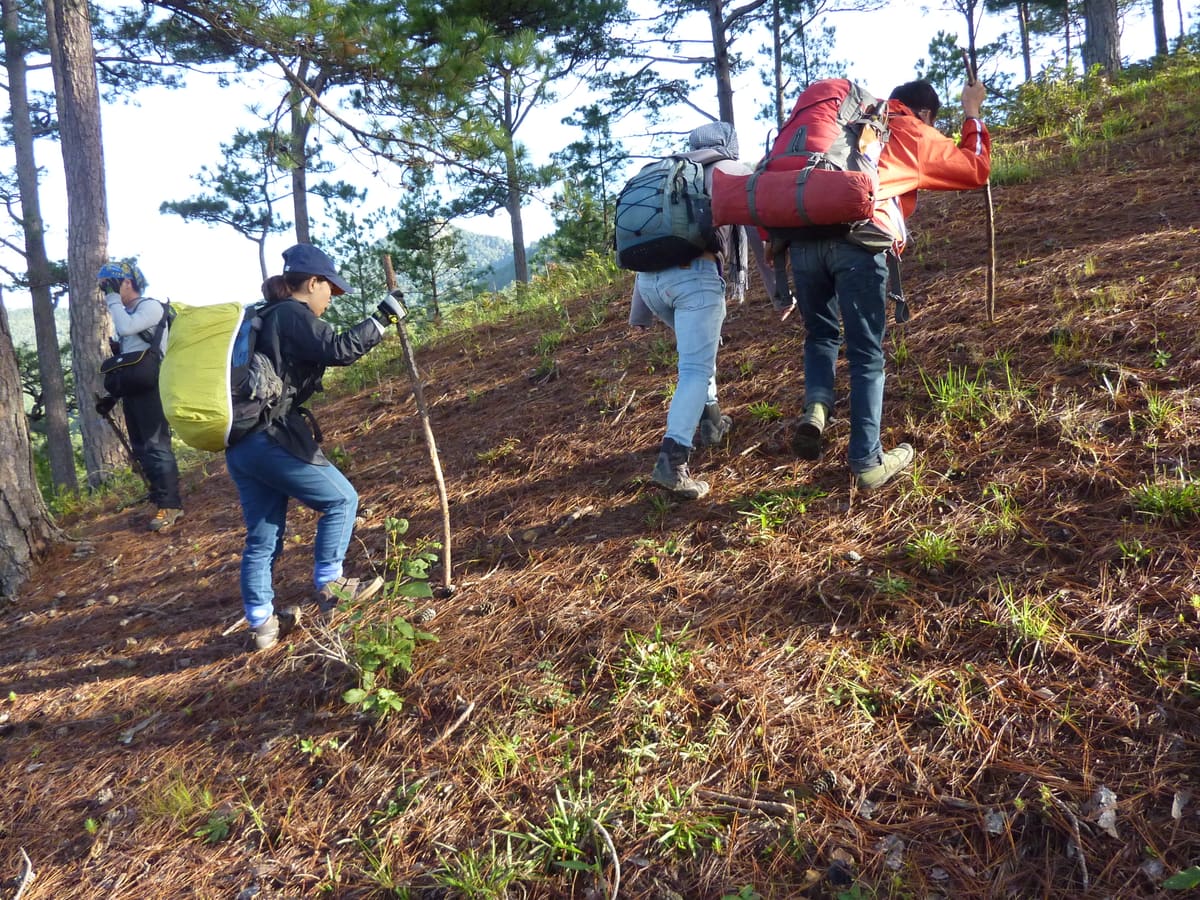
Vietnam is more mountainous than most travelers realize. The country is 75% mountain, with 3,143 m at Fansipan, dozens of peaks above 2,500 m in the north, the Central Highlands rolling 1,000 m, and several coastal ranges. The hiking is excellent, varied, and — outside Sa Pa — uncrowded.
The day hikes
Sa Pa and the terraces
The famous walks go through the terraces of Mường Hoa valley and down to the H'Mông and Dao villages of Lao Chải and Tả Van. The half-day walk from Sa Pa town to the villages, then a homestay, then continuing to Bản Hồk, is the classic 2-day. The terrain is rolling, the elevation change is 300-500 m, the trail is well-marked, and you need a local guide (the trails split, the weather changes fast).
Hang Kia–Pà Coò (Hòa Bình province, 4 hours from Hà Nội)
The best-kept-secret walk in northern Vietnam. Two days, two villages, an authentic H'Mông home stay, no other tourists. Through rice terraces and forest. The local tourism cooperative in Hang Kia runs the homestay and guide network. Easy day trip or weekend from Hà Nội.
Tà Năng–Phan Dũng (Lâm Đồng–Bình Thuận, 4 days)
Called "the most beautiful hike in Vietnam" by everyone who walks it. A 50-km ridge-and-valley walk through the southern Central Highlands, mostly empty, with forest, dry grasslands, and small War-era minority villages. You can do it independently or through a tour agency.
Mount Bà Nà (Đà Nẵng, day trip)
A 1,487-m peak with a French-built resort, a famous "golden hand bridge" (the Instagram thing), and a 4-6 hour round-trip hike from the cable car station. Half-day, popular, easy.
Yok Đôn National Park (Đắk Lắk, Central Highlands)
The largest national park in Vietnam (1,155 km²), lowland tropical forest, home to elephants and several primate species. 2-3 day treks into the forest, homestay with Mnong people, off the typical route.
Cat Ba National Park (Hạ Long Bay)
Hour to half-day hikes through the karst forest on Cat Ba island. The summit of the highest peak (Cát Còm, 331 m) is a 3-hour round trip with a view of the bay. The Cannon Fort at the top of the ridge is a quick walk with the same view. Combine with a Lan Hạ boat trip.
The multi-day hikes
Sa Pa to Bắc Hà (3 days)
The classic 3-day hike through the H'Mông villages south of Sa Pa, ending in the Sunday Bắc Hà market (time it right). Hard, beautiful, with a local guide required.
Tà Năng to Phan Dũng (4 days)
See above. 50 km, mostly empty.
Hà Giang loop (motorbike, 4 days)
Not strictly a hike but the most spectacular 4 days of road in Vietnam, 350 km around the northernmost province, with several hikeable side trips into the karst landscapes of the Dong Van Plateau. The Meo Vac, Dong Van, Yen Minh, Quan Ba loop. Easy to do on a rented motorbike.
Sơn Đoòng and the Hang Én expedition (1-3 days)
Phong Nha-Kẻ Bàng. See the Phong Nha article. The trek in is part of the trip.
What to bring
- Hiking shoes (real ones, not trainers)
- Rain jacket (tropical, so a real one)
- Headlamp
- Water filter or purification tablets
- Reef-safe sunscreen and DEET-free insect repellent (the area is malaria-risk in some parts)
- Basic first aid (blister, anti-diarrheal, rehydration salts)
When to hike
North Vietnam: September-November and March-April. Avoid July-August (rain, leeches) and December-February in high altitudes (cold, occasional snow above 1,500 m).
Central Highlands: November-April (dry season).
What to know
Don't hike without a local guide. The trails are not maintained, the weather changes fast, and the rescue infrastructure is weak. The local guides are excellent (the ethnic minority H'Mông, Dao, and Tày guides in particular) and a guide from the local community is the most ethical, most enjoyable, and safest option. Pay $25-50/day for guide, less if you also take the homestay.
The "luxury" version of most hikes in Vietnam is a tour operator (Oxalis for Phong Nha, ETHOS for Sa Pa, etc.). They handle logistics, transport, food, gear. The "do it yourself" version is also good, but the gap between the two is mostly just the heavy lifting — both end at the same place.
Filed under
Plan a trip to Indonesia
Use our AI trip planner to create a personalized itinerary in 30 seconds.
✨ Try the AI trip planner