feature
Malaysian Food: The Fusion That Works
Malaysian food is the most-successful fusion in Southeast Asia, with the Malay, Chinese, Indian, and Peranakan traditions all contributing. Here's the cultural logic, the regional dishes, the street food etiquette, and the dishes you should know.
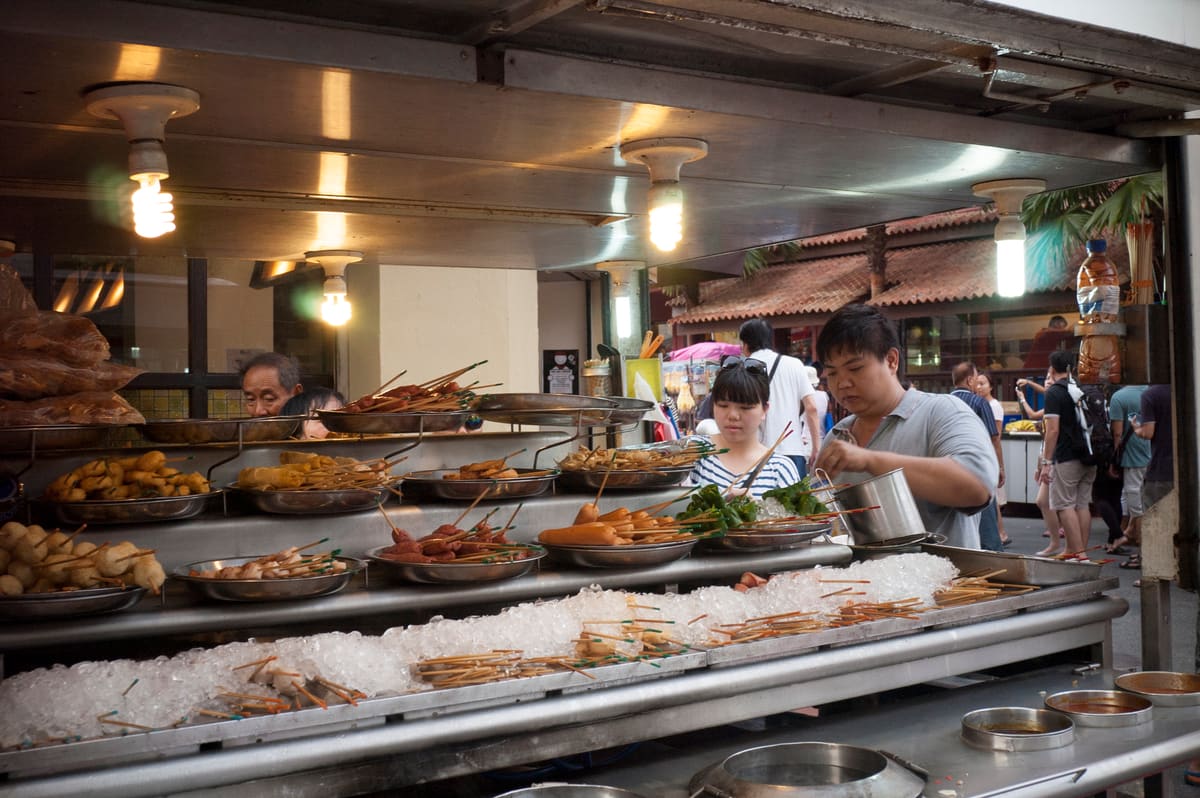
Malaysian food is the most-successful fusion in Southeast Asia, and the most-underrated. The country is at the crossroads of the Malay, Chinese, Indian, Thai, Indonesian, and Arab culinary worlds, and the resulting cuisine is the most-distinct in the region.
The four main traditions
Malay
The original Malaysian cuisine, the most distinct, the most aromatic. The use of coconut milk (santan), the use of chili paste (sambal), the use of lemongrass, the use of turmeric, the use of pandan. The most-photographed dishes: nasi lemak, rendang, satay, laksa lemak, sambal udang, beef rendang.
Chinese (the most-foreign-influenced)
The Chinese immigrants brought their own regional cuisines, and the resulting Malaysian-Chinese cuisine is the most-distinct in Southeast Asia. The Hokkien (Fujian), the Cantonese, the Teochew, the Hakka, the Hainanese all contributed. The most-photographed dishes: char kway teow, Hokkien mee, Hainanese chicken rice, wantan mee, dim sum, bak kut teh.
Indian
The Indian immigrants brought the South Indian (Tamil), the North Indian, the Mughal, and the Muslim (Mamak) cuisines. The most-photographed dishes: nasi kandar, roti canai, banana leaf rice, biryani, tandoori, murtabak, teh tarik. The mamak stalls (the 24-hour Indian-Muslim restaurants) are the most-photographed culinary institution in Malaysia.
Peranakan (the Nyonya-Baba, the Chinese-Malay fusion)
The most-distinct Malaysian cuisine, the result of the Chinese settlers marrying the local Malay women in the 15th-17th centuries. The cuisine is a complex layering of Chinese techniques with Malay ingredients. The most-photographed dishes: laksa lemak (the coconut-milk-based), ayam pongteh (the braised chicken), Nyonya cendol, Nyonya kuih, the colorful rice dumplings. The most-photographed region: Penang and Malacca.
The 20 dishes you should know
- Nasi lemak: The coconut rice with sambal, anchovies, peanuts, hard-boiled egg, cucumber. The national dish. Served at breakfast, lunch, dinner. The most-photographed dish in Malaysia.
- Rendang: The slow-cooked dry beef curry, originally from the Minangkabau of Sumatra, the Malaysian version is the most-celebrated. The dish takes hours to cook, the result is the most-flavorful.
- Char kway teow: The Penang-origin stir-fried flat rice noodles with prawns, egg, bean sprouts, lard. The most-photographed noodle dish in Malaysia.
- Asam laksa: The Penang-origin sour-spicy fish-based noodle soup. The most distinct of the laksa variants.
- Hokkien mee: The Penang-origin prawn-based noodle soup, the most distinctive version. The most-photographed Penang dish.
- Satay: The grilled meat skewers with peanut sauce. The most-photographed street food. The best version: Kajang (the most-photographed satay town).
- Roti canai: The Indian-influenced flatbread, served with dhal or curry. The most-photographed mamak dish.
- Nasi kandar: The Indian-Muslim rice-and-curry dish, the Penang version, the most-celebrated.
- Banana leaf rice: The South Indian rice served on a banana leaf with 4-5 curries, the most-photographed Indian dish.
- Hainanese chicken rice: The poached chicken on rice cooked in chicken fat, the Malaysian version, the most-photographed in Southeast Asia.
- Bak kut teh: The pork-bone tea, the herbal broth, the most-photographed Chinese-Malaysian dish. The best version: Klang (the most-photographed bak kut teh town).
- Wantan mee: The noodle dish with dumplings, the most-photographed in Kuala Lumpur.
- Dim sum: The Cantonese brunch tradition, the Malaysian version (the most-photographed is in Kuala Lumpur and Penang).
- Cendol: The shaved-ice dessert with coconut milk, palm sugar, green rice flour jelly, red beans. The most-photographed dessert in Malaysia.
- Durian: The "King of Fruits," the most-photographed fruit, the most-pungent smell. The best in season: June-August.
- Mango pomelo sago: The dessert, the most-photographed in the Chinese restaurants.
- Teh tarik: The "pulled tea," the Indian-Muslim tea with condensed milk, the most-photographed drink in Malaysia. The pulling is the show.
- Kopi: The Malaysian coffee, the most-photographed, the most-distinct (the coffee bean is roasted with margarine and sugar).
- Air bandung: The pink milk drink with rose syrup, the most-photographed in the mamak stalls.
- Ramly burger: The Malaysian-style burger with the patty wrapped in egg, the most-photographed street food, the most-distinct.
The street food etiquette
- The hawker centers (the open-air food courts) are the standard. The most-photographed: the New Lane in Penang, the Gurney Drive hawker center, the Jonker Street night market, the Lot 10 Hutong (the upscale version in KL).
- Look for the stalls with the longest queue of local people. The stalls with the most foreign tourists are usually the ones the locals stopped going to.
- Tipping is not expected. The price on the menu is the price.
- Order multiple dishes and share. The hawker food is designed for sharing.
- Drink the local drinks: teh tarik, kopi, fresh sugarcane juice, fresh coconut water. The local drinks are part of the experience.
What to know about the food safety
Malaysian street food is the safest in Southeast Asia (after Singapore). The vendors are licensed, the food is cooked in front of you, the turnover is fast, the temperatures are hot, and the government enforces hygiene standards.
The water: the ice is safe (factory-made from clean water), the tap water is not for drinking.
Where to eat the best food in Malaysia
- Penang (George Town): The street food capital of Asia. The most-photographed: the New Lane, the Gurney Drive, the Pulau Tikus Market, the Cecil Street Market.
- Kuala Lumpur: The most international. The most-photographed: the Lot 10 Hutong (the upscale hawker), the Jalan Alor (the night street food), the Petaling Street (the Chinatown).
- Malacca: The Nyonya-Baba food capital. The most-photographed: the Jonker Street, the Capitol Satay, the Nancy's Kitchen.
- Kuching: The Sarawak food capital. The most-photographed: the Top Spot (the food court on the parking garage), the Choon Hui Cafe, the Bee Ho Seafood.
- Kota Kinabalu (Sabah): The seafood capital. The most-photographed: the Welcome Seafood, the Filipino Market, the Centre Point.
Filed under
Plan a trip to Indonesia
Use our AI trip planner to create a personalized itinerary in 30 seconds.
✨ Try the AI trip planner