feature
Penang: The Pearl of the Orient, the Street Food Capital of Asia
A 1,000-km² island off the northwest coast of Malaysia, the first British trading post in Southeast Asia, the UNESCO heritage city of George Town, the street food capital of Asia (according to multiple international rankings), and the most-photographed street art in the region.
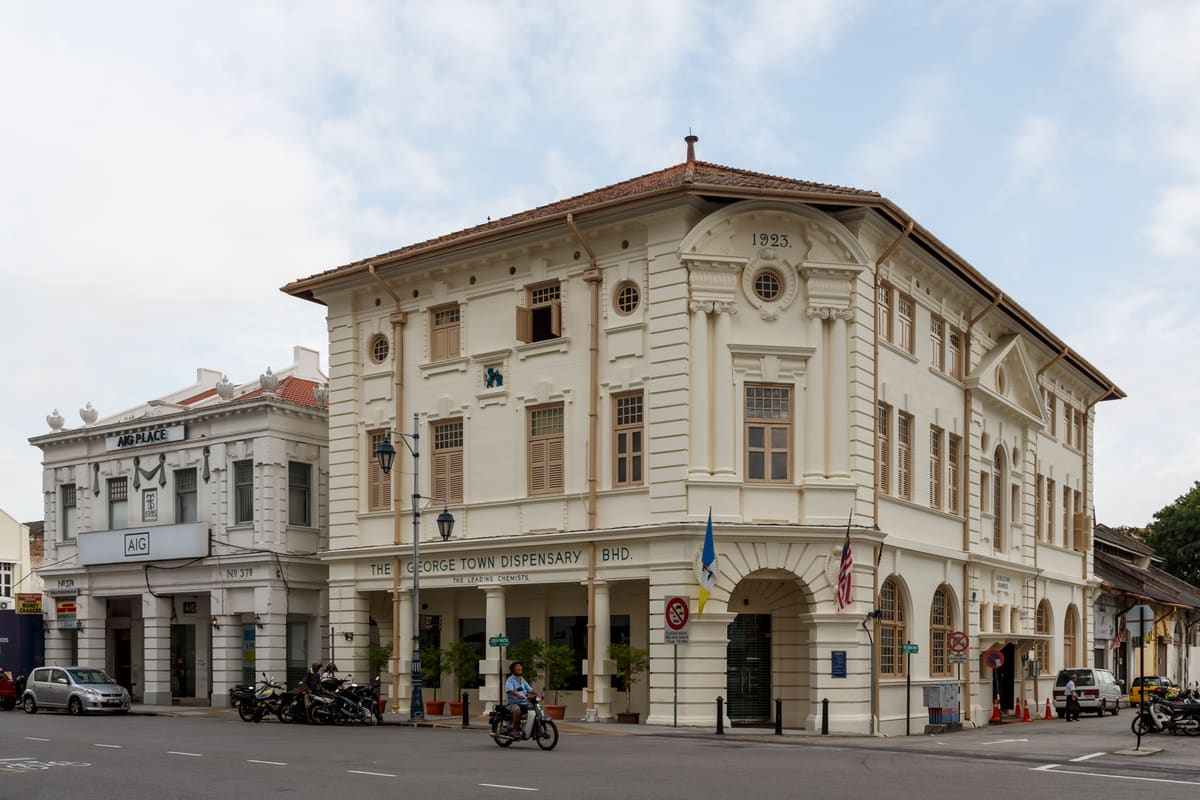
Penang (the "island of the betel nut") is a 1,000-km² island off the northwest coast of the Malay Peninsula, connected to the mainland by two bridges and a ferry. The population is 1.7 million, the capital is George Town (a UNESCO World Heritage Site since 2008), and the food is the most-celebrated in Southeast Asia.
Penang was the first British trading post in Southeast Asia (1786, when the British East India Company took the island from the Sultan of Kedah), and the resulting mix of British, Chinese, Malay, Indian, and Peranakan (Straits Chinese) cultures is the most distinct in Malaysia. The UNESCO heritage status recognizes the unique architecture, the most-photographed street art, and the most-refined food culture.
What to do
George Town (the UNESCO heritage zone)
The 109-hectare core of the old city, with 5,000+ buildings of British-colonial, Chinese, and Straits Chinese architecture. The most-photographed streets: Armenian Street, Cannon Street, Love Lane, Lebuh Chulia, the Clan Jetties (the Chinese stilt-house villages on the water). The most-photographed: the Khoo Kongsi clan house, the Cheah Kongsi, the Peranakan Mansion, the Pinang Peranakan Mansion.
The street art
George Town is famous for the Ernest Zacharevic murals (the Lithuanian artist who painted the "Children on a Bicycle," "Boy on a Chair," "Little Girl in Blue" — the most-photographed street art in Southeast Asia), plus the 52 steel rod sculptures by the local artists (the most-photographed are the "101 Lost Kittens" and the "Magic" series). The street art has become the defining visual of the city.
The food
Penang is the street food capital of Asia according to multiple international rankings. The famous dishes:
- Char kway teow: The stir-fried flat rice noodles with prawns, egg, bean sprouts, lard. The most famous Penang dish, the most-photographed.
- Asam laksa: The sour-spicy fish-based noodle soup, the Penang signature. The most distinct of the laksa variants.
- Hokkien mee: The prawn-based noodle soup, the Penang version, the most distinctive.
- Hawker food: The general term for the open-air hawker centers, the most famous being the New Lane (Lorong Baru), the Gurney Drive, the Pulau Tikus Market, the Cecil Street Market.
- Nasi kandar: The Indian-Muslim rice-and-curry dish, the Penang version, the most-celebrated.
- Cendol: The shaved-ice dessert with coconut milk, palm sugar, green rice flour jelly. The most-refreshing in the tropical heat.
Clan Jetties (the Chinese stilt villages)
The 7 remaining Chinese clan jetties on the waterfront, the most-photographed being the Chew Jetty, the Lee Jetty, the Yeoh Jetty. The wooden stilt houses, the small temples, the souvenir shops, the most atmospheric in George Town.
Penang Hill (Bukit Bendera)
The 720-m hill 6 km from the city, the funicular railway (the oldest in Asia, 1923), the view of the island, the colonial-era bungalows at the top. The most-photographed viewpoint in Penang.
Kek Lok Si Temple
The largest Buddhist temple in Malaysia, 7-tier pagoda, the 30-m bronze statue of the Goddess of Mercy (Kuan Yin), the panoramic view of George Town. The most visited temple in Penang.
Batu Ferringhi (the beach)
11 km north of George Town, the most-photographed beach in Penang, the night market, the water sports. The most developed beach on the island.
When to go
December to March: The best months. Dry, the Penang International Dragon Boat Festival, the Chinese New Year (the most-photographed in Malaysia).
April to November: The wet season. The rain is heavy but short, the food is the same, the prices are lower.
How long to stay
3-4 days for George Town. 1 week to include the beaches, the Penang Hill, and the food exploration. 2 weeks to include the southern beaches and the relax.
How to get there
1-hour flight from KL ($30-80). 4-5 hours by bus from KL. The Penang International Airport is in the south, 30-45 minutes to George Town.
Where to stay
George Town: The most atmospheric, the most cultural. The boutique hotels in the heritage shophouses (the Muntri Mews, the Seven Terraces, the Cheong Fatt Tze Mansion), the heritage guesthouses, the hostels.
Gurney Drive: The most modern, the most mall, the most food. The Gurney Plaza, the Gurney Paragon, the mid-range hotels.
Batu Ferringhi: The most beach, the most resort, the most family-friendly. The Shangri-La, the Golden Sands, the mid-range resorts.
Cost (3-4 days, per person, 2 sharing, mid-range)
- Accommodation: $30-150/night × 3 = $90-450
- Food: $10-25/day = $30-75
- Activities: $20-40
- Transport: $10-20
- Total: $150-585
Filed under
Plan a trip to Indonesia
Use our AI trip planner to create a personalized itinerary in 30 seconds.
✨ Try the AI trip planner