feature
Sa Pa: The Terraces, the Fog, and the Hill Tribes
A hill town in the far north, a 100-year-old French resort, the most spectacular rice-terrace landscapes in Vietnam, and the home of the H'Mông, Dao, Tày, and Giáy ethnic minorities — most of whom you can still stay with.
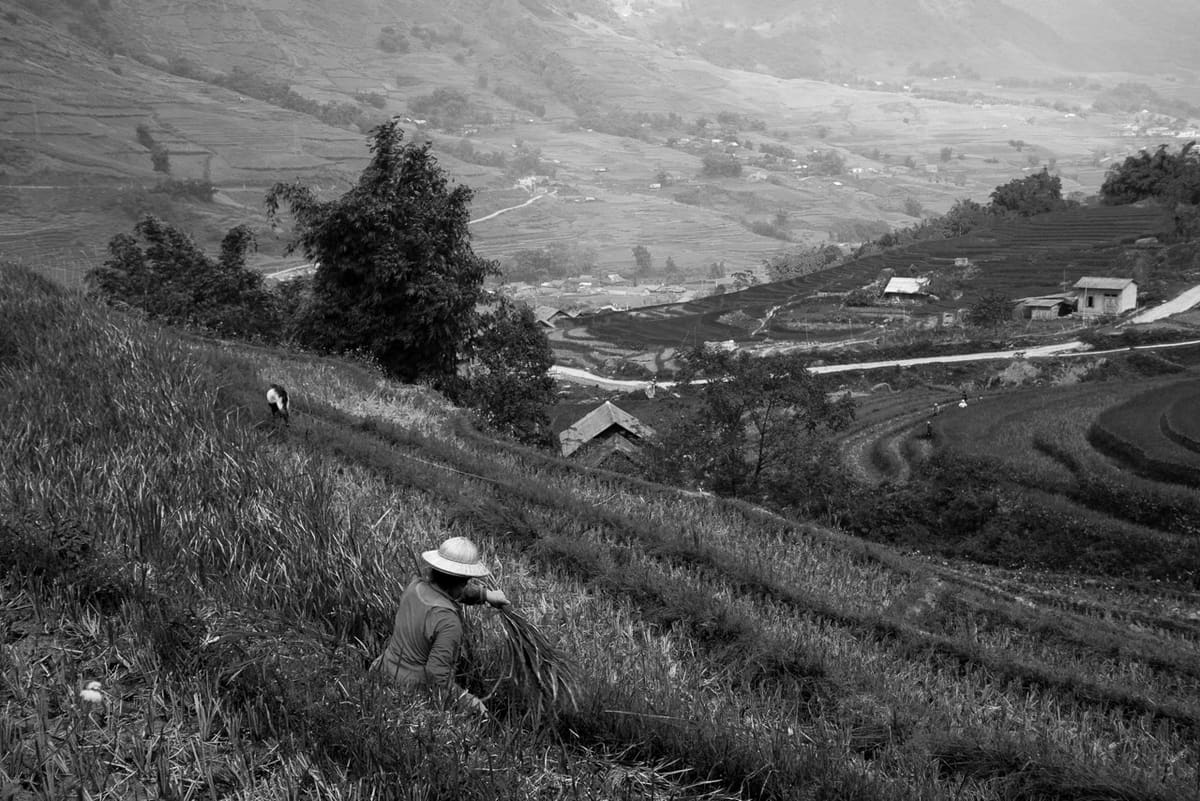
Sa Pa is a small town at 1,500 m elevation in the Hoàng Liên Sơn mountains, the highest range in Vietnam. The French built a hill station here in the 1920s; the Vietnamese kept it; backpackers discovered it in the 1990s; it is now the most visited highland destination in the country, especially since the cable car up to Fansipan (the highest peak in Indochina, 3,143 m) was built in 2016.
The thing that makes Sa Pa is the terraces. The H'Mông, Dao, Tày, and Giáy peoples have been carving rice terraces into these mountains for 1,000+ years, and the resulting landscape — curves of green or gold or water, climbing up impossible slopes — is one of the great agricultural sights in Asia. From May to September the terraces are flooded and reflective; in September and October they turn gold for harvest.
What to do
The terraces
Three main terrace valleys. Mường Hoa is the closest (5 km south of town, walk or motorbike) and the most photogenic. The walk down through the villages of Lao Chải and Tả Van is a half-day, and the home stays in Tả Van are the best in the area.
Y Tý and Mù Cang Chải (further, 2-3 hours by motorbike or day trip) are the spectacular, less-touristy alternatives. Y Tý in particular has become a photographer's favorite — the rolling fog over the terraces in early morning is famous.
Fansipan
The cable car up to 3,143 m. 15 minutes each way. The summit has a tourist complex, restaurants, and a view of mountains all the way to China on a clear day. Most people do it as a half-day trip. The cable car is the second-highest in the world.
Homestay with an ethnic minority family
This is the unique Sa Pa experience. Several H'Mông and Dao families in the surrounding villages take guests. The accommodation is basic (wooden stilt house, shared bathroom, sleeping bag or mattress on the floor) but the food is excellent, the host family is the family, and the cultural exchange is genuine. Try Tả Van Homestay or any of the half-dozen H'Mông homes in Lao Chải.
Markets
Sa Pa town has a market every day (mostly touristy on weekends). The real market culture is in the weekly markets in the surrounding villages:
- Bắc Hà market (Sunday): 1.5 hours east. The most authentic weekly market. Flower H'Mông, Red Dao, Tay, Nung all come down from the hills. Livestock, fabric, food. Best Sunday morning market in the north.
- Cốc Ly market (Tuesday): Smaller, less touristy, mostly Flower H'Mông.
- Lùng Khẩu Nhìn market (Saturday): 35 km from Sa Pa, requires a guide, very authentic.
What to know
Weather: Cool year-round, but the temperature range is 0°C in winter (Dec-Feb) to 25°C in summer. Bring layers. Misty and drizzly half the time, but the cloud breaks sometimes and reveals the mountains.
Best months: September-October (gold harvest, clearest weather, biggest festivals) and April-May (water-flooded terraces).
Trekking: Don't do a Sa Pa trek without a local guide from an ethnic minority family. The trails are easy to get lost on, the weather changes fast, and you'll be approached by guides in town. Find one through a homestay.
The cable car changes things: Many Sa Pa tours now include the Fansipan cable car as a half-day. Combined with a homestay and a market visit, that's a perfect 3-day itinerary.
How long to stay
2-3 nights is the minimum. 3-4 nights is the sweet spot — one day for a village walk, one day for Fansipan, one day for a market or a homestay, plus rest day for the altitude adjustment.
How to get there
From Hà Nội: overnight sleeper bus (8 hours) or limousine van (5.5 hours, recommended) or train to Lào Cai + 1-hour transfer (most comfortable, the train ride itself is a scenic experience).
Filed under
Plan a trip to Indonesia
Use our AI trip planner to create a personalized itinerary in 30 seconds.
✨ Try the AI trip planner