feature
Singapore: The City-State That Refused to Be a Country
A 733-km² island at the tip of the Malay Peninsula, 5.9 million people, the 3rd-richest country per capita, the most-photographed skyline in Asia, the most-efficient government in the world, the most expensive city to live in, and the most-surprising food city on the planet.
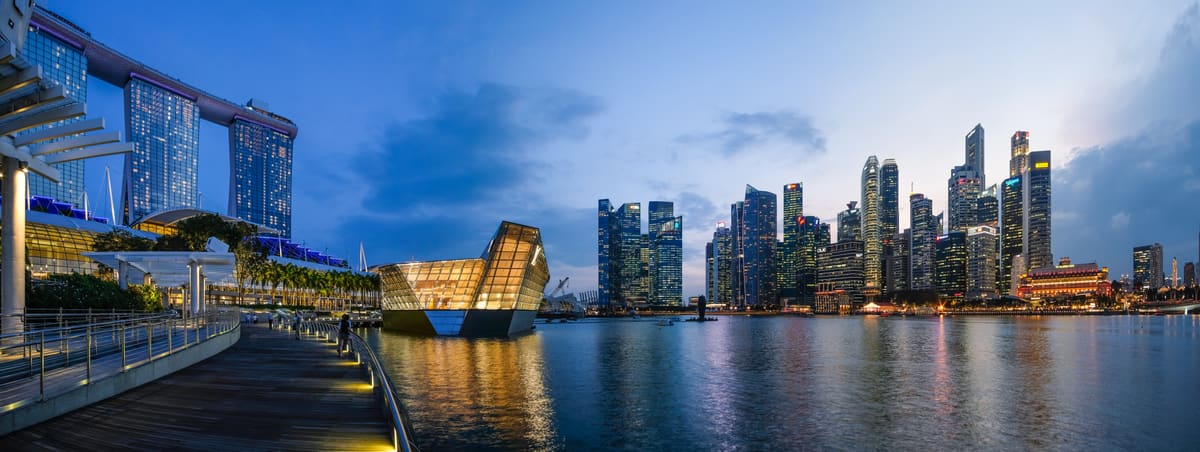
Singapore is a 733-km² island at the tip of the Malay Peninsula, connected to Malaysia by a 1-km causeway and to Indonesia by a 2-km bridge. The population is 5.9 million (residents, plus 1-2 million non-residents), 76% Chinese, 15% Malay, 7.5% Indian, plus the rest. The official languages are English, Malay, Mandarin, and Tamil. The most-spoken language is English. The most-distinct feature is the food.
Singapore was a British trading post (1819-1963), then a state of Malaysia (1963-1965), then an independent city-state (1965-present). The founding father, Lee Kuan Yew, turned a small port city into the 3rd-richest country per capita in the world. The most-photographed: the Marina Bay Sands, the Merlion, the Gardens by the Bay, the hawker centers, the Changi Airport (the world's most-photographed airport).
What makes Singapore different
The food is the headline. The hawker centers are the most-photographed in the world, the most-distinct, the most-affordable. The Michelin-starred street food stalls (the Hong Kong Soya Sauce Chicken Rice, the Liao Fan Hawker Chan, the cheapest Michelin-starred meal in the world) are the most-photographed. The 20+ Michelin-starred restaurants are the most-photographed in the region. The Peranakan cuisine, the Malay cuisine, the Chinese cuisine, the Indian cuisine — all of it is the most-refined in the region.
The skyline is the second headline. Marina Bay Sands (the 3-tower hotel with the boat on top, the most-photographed in Asia), the Singapore Flyer (the 165-m observation wheel, the most-photographed in Southeast Asia), the Supertree Grove (the 50-m tall vertical gardens, the most-photographed in the world).
The airport is the third headline. Changi is the most-photographed airport in the world, with the Jewel (the 40-m indoor waterfall, the most-photographed), the butterfly garden, the sunflower garden, the movie theater, the swimming pool. The airport is a destination, not just a transit point.
The gardens are the fourth headline. Gardens by the Bay (the 101-hectare nature park, the Supertree Grove, the Cloud Forest, the Flower Dome), the Singapore Botanic Gardens (the 74-hectare UNESCO World Heritage Site, the National Orchid Garden).
The shopping is the fifth headline. Orchard Road (the 2-km shopping belt, the most-photographed in Southeast Asia), the ION Orchard, the Ngee Ann City, the 24-hour Mustafa Centre (the most-photographed in Little India), the Chinatown Street Market.
What to know before you go
- Visas: 90-day visa-free for 60+ countries. The SG Arrival Card is required (free, online).
- Money: Singapore dollar (SGD). 1 USD ≈ 1.35 SGD. Credit cards are universally accepted. The cash is still useful for the hawker centers, the local markets.
- Language: English (the most-spoken), Malay, Mandarin, Tamil. The "lah" particle is the most distinctive feature of Singlish (Singapore English).
- Best months: February to April (the dry season, the most-photographed, the most-comfortable).
- Cost: The most expensive city in Southeast Asia (along with Hong Kong). The hawker centers are the exception — the food is the most-affordable Michelin meal in the world.
- Drugs: The drug laws are extremely strict (the death penalty is in place). Don't bring, buy, or use.
The 3-day plan at a glance
- Day 1: Marina Bay (the Sands, the Merlion, the Gardens by the Bay)
- Day 2: The hawker centers + the neighborhoods (Chinatown, Little India, Kampong Glam)
- Day 3: Sentosa Island (the Universal Studios, the S.E.A. Aquarium, the beaches)
Singapore rewards the slow traveler. The hawker centers are worth visiting 3-4 times during the trip. The neighborhoods are worth exploring. The gardens are worth walking. The skyline is worth seeing at sunset and at night. The airport is worth a half-day if you have a long layover.
Filed under
Plan a trip to Indonesia
Use our AI trip planner to create a personalized itinerary in 30 seconds.
✨ Try the AI trip planner