feature
The Markets of Vietnam: A Buyer's (and Eater's) Guide
Vietnamese markets are where the country actually lives — wet markets at dawn, night markets at 9 p.m., floating markets in the delta, and the mountain markets of the highland minorities. Here's what to know.
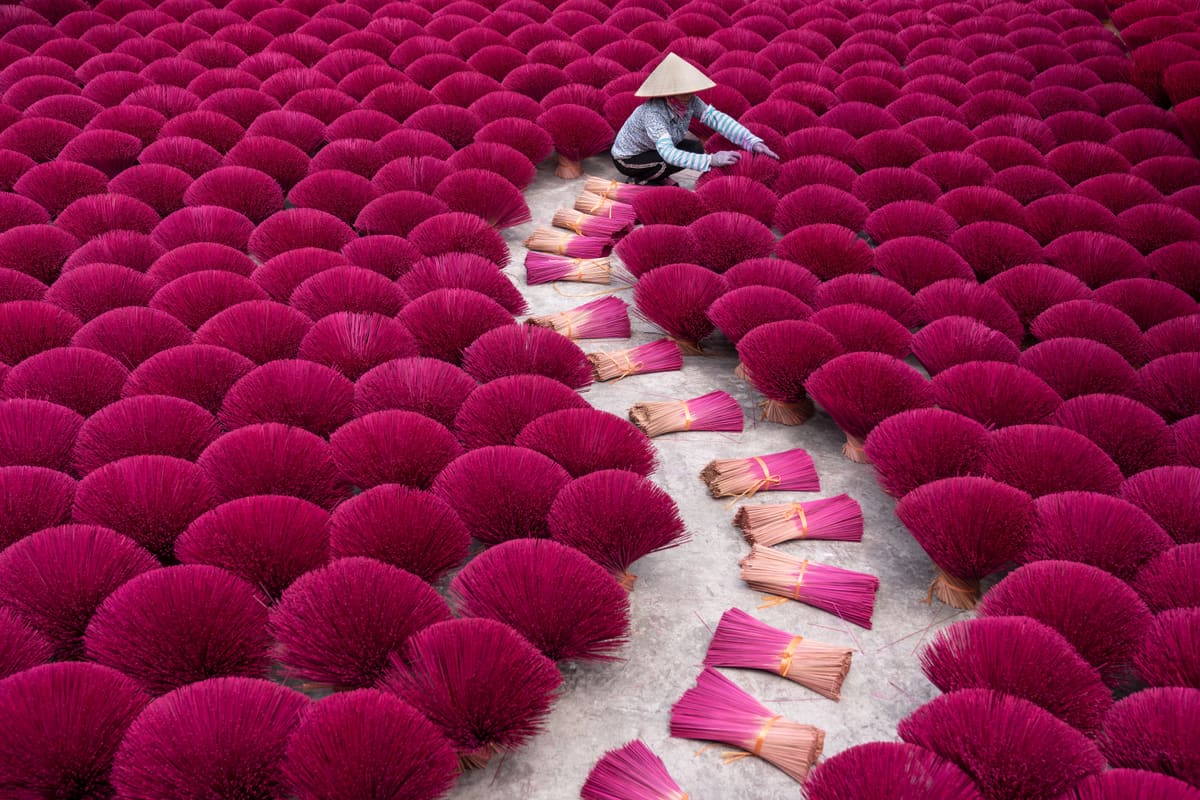
Vietnam has at least three kinds of markets, and each is worth going out of your way for.
Wet markets (chợ)
The every-day food markets that exist in every Vietnamese neighborhood. Open 4 a.m. to 5 p.m., busiest 6-9 a.m. Stalls of vegetables, herbs (the herb section alone is 30+ varieties per market), meat hanging from hooks, live fish in tubs, eggs of duck and quail and pigeon, a dozen rice varieties, a hundred fruit stalls, several coffee beans, dried squid, and a few vendors of the few things the supermarket carries. The people who work here have done so for 30 years.
How to enjoy one: get there before 7 a.m., bring a small amount of cash, walk every aisle, eat something you can't name. Most markets have a "eat here" section with maybe 10-20 plastic stools, where the same vendors who sell the raw ingredients also serve a one-bowl breakfast of the freshest possible version of whatever they sell.
The wet markets to know:
- Đồng Xuân Market (Hà Nội): The biggest in the north. Cheap clothes, housewares, food upstairs. The "real" market is the wholesale market behind it, where the restaurant owners shop at 4 a.m.
- Bến Thành Market (Saigon): The famous one. Touristy in the front, real in the back. Worth seeing once.
- Hội An Central Market: The food court in the morning is the best meal in town. Walk the produce aisles in the evening, then eat the cơm gà.
- Chợ nổi Cái Răng (Cần Thơ): The most famous floating market.
Night markets (chợ đêm)
The tourist-oriented, food-heavy, 5 p.m. to 11 p.m. markets. Every city has one. The famous ones:
- Phú Quốc night market (Dương Đông): Grilled seafood, sugarcane juice, bánh tráng nướng. The best on any island in Vietnam.
- Đà Lạt night market: Cold weather, warm clothes, hot food, strawberries, and the famous bánh tráng nướng Đà Lạt (a Vietnamese pizza).
- Saigon night market (Bùi Viện walking street area): Touristy but fun, lots of street food.
- Sapa night market (weekends): H'Mông textiles, silver jewelry, embroidered bags, plus the usual grilled food.
Hill-tribe markets (chợ phiên)
Weekly markets in the northern highlands where the ethnic minorities (H'Mông, Dao, Tày, Nùng) come down from the mountains to trade. The most authentic remaining market culture in Vietnam. Best ones:
- Bắc Hà market (Sunday): 1.5 hours from Sa Pa, the most famous. Flower H'Mông, Red Dao, all the colors. Best before 10 a.m.
- Cán Cấu market (Saturday): 1 hour from Bắc Hà, smaller and more local.
- Lùng Khẩu Nhìn market (Saturday): Hard to reach (35 km off the main road), requires a guide, very authentic.
- Đồng Văn market (Sunday): Hà Giang, far north. The H'Mông King Palace is here. Very few tourists.
Floating markets (chợ nổi)
The Mekong Delta specialty. Boats cluster on the river, each selling one thing, advertising the product by hanging a sample from a tall pole. The famous ones are over-touristic at 8 a.m. but still worth seeing. Go earlier.
- Cái Răng (Cần Thơ, daily, peak 6-7 a.m.): The famous one.
- Cái Bè (Tiền Giang, daily): Smaller, on the way to Mỹ Tho, less crowded.
- Phong Điền (small canal near Cần Thơ): Even smaller, more local.
What to bring
A small bag with cash in small denominations (50,000 and 100,000 VND notes), a cloth shopping bag, comfortable shoes, and zero expectation of finding "authentic" or "untouristed" anywhere marked on TripAdvisor. The "real" markets are the ones with the most activity, not the least.
Etiquette
Ask before photographing people. Don't touch produce unless you're buying it. Don't bargain hard — these are working people making 50 cents an hour. The discount on a 50,000 VND basket is 5,000 VND; the relationship with the vendor is the point.
Filed under
Plan a trip to Indonesia
Use our AI trip planner to create a personalized itinerary in 30 seconds.
✨ Try the AI trip planner