Nasi Padang
Nasi Padang
The recipe
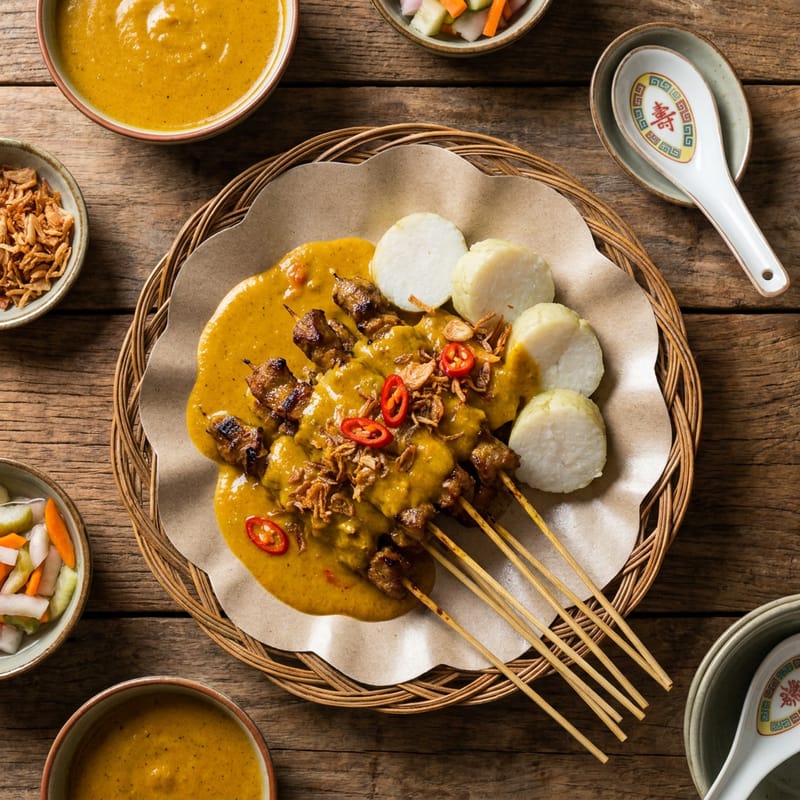
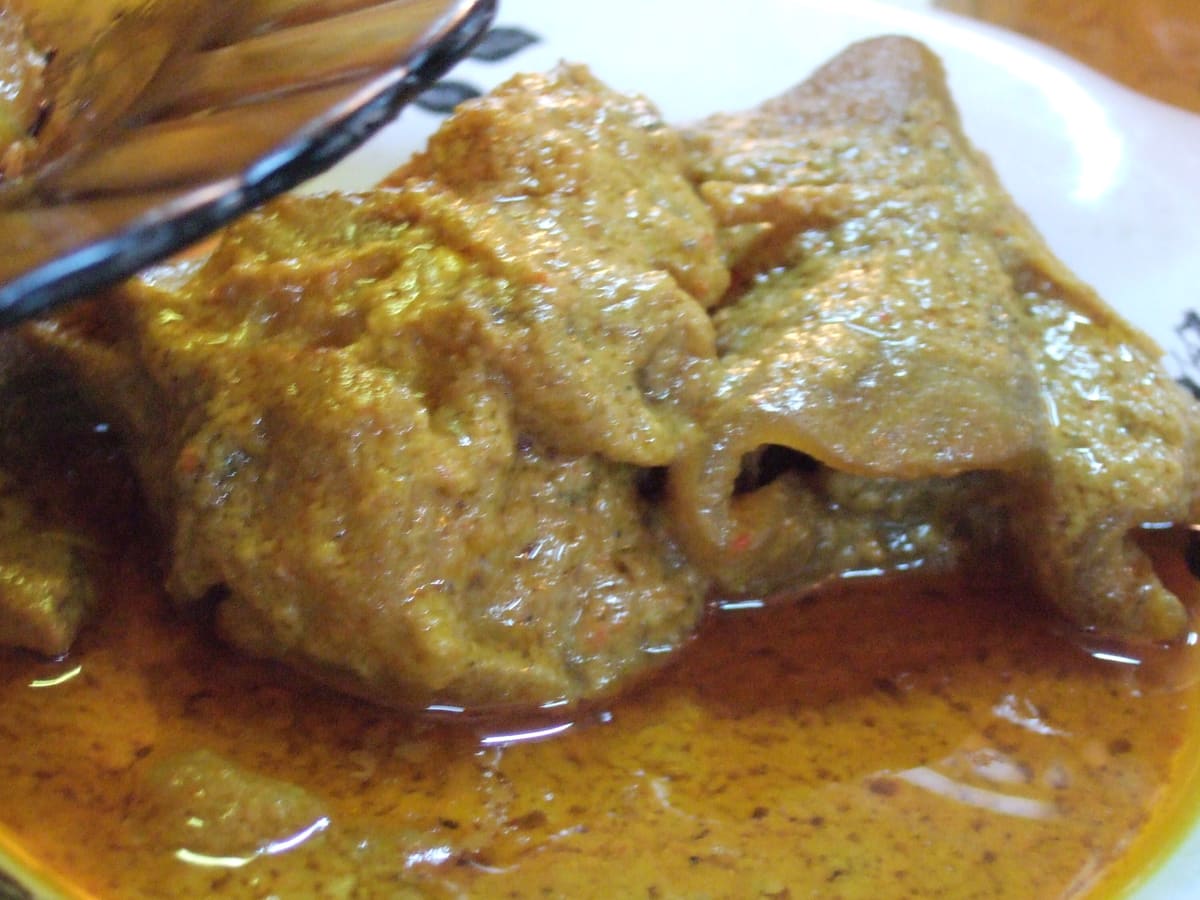
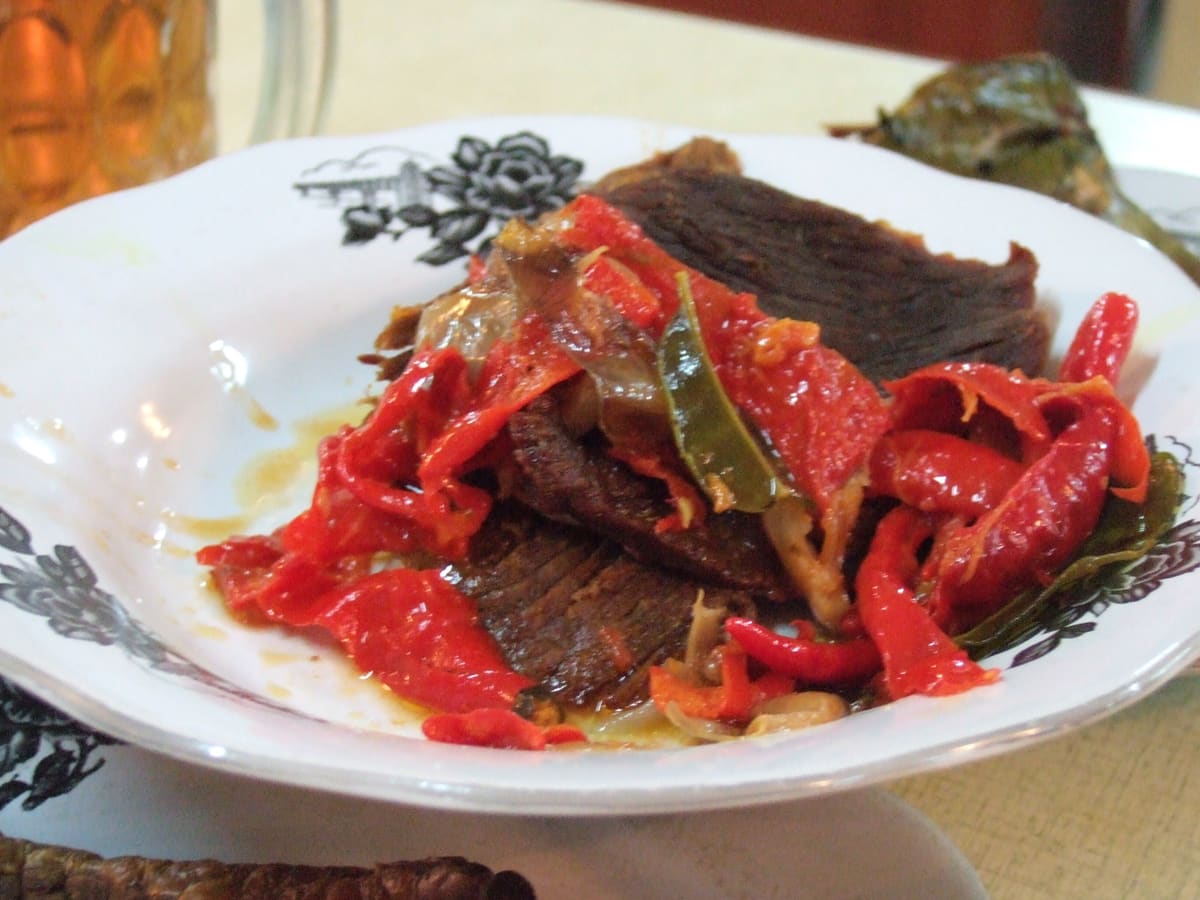
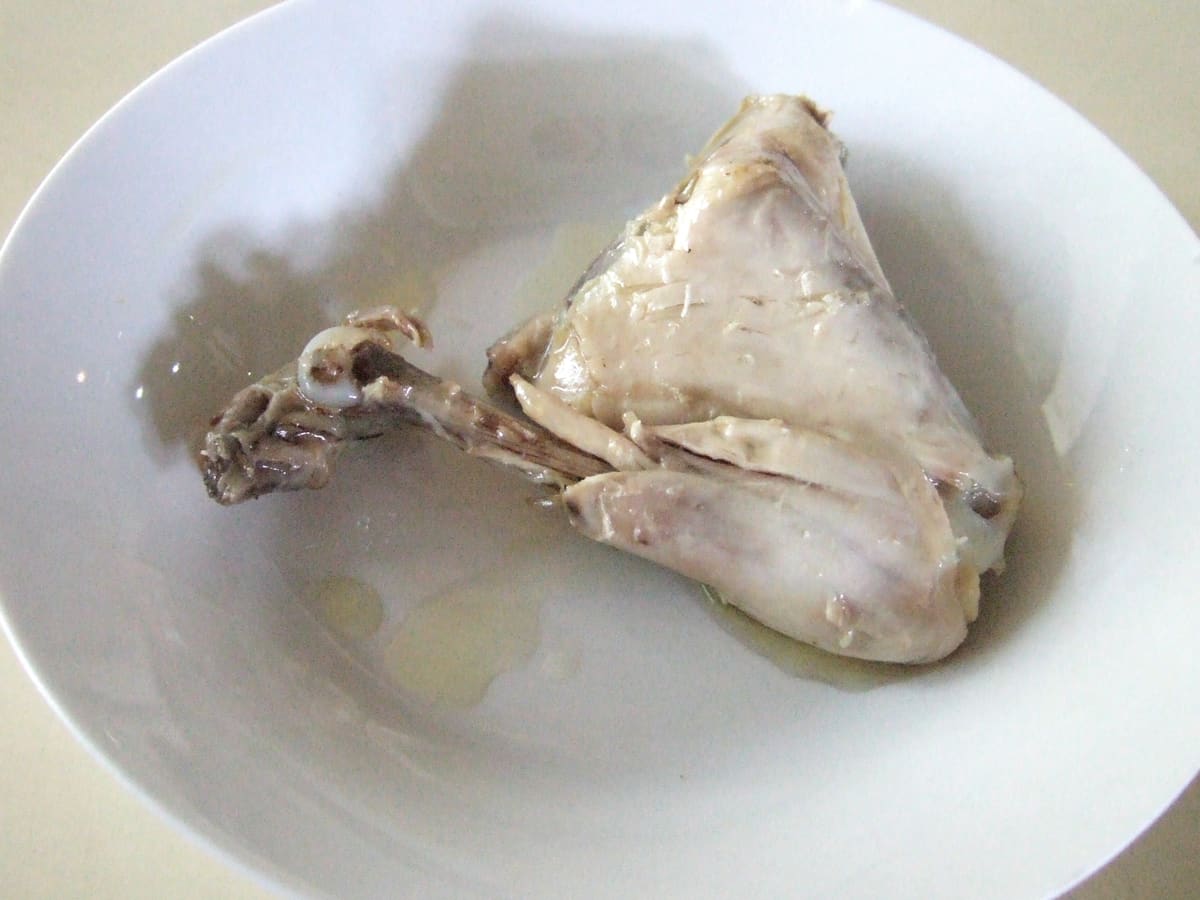
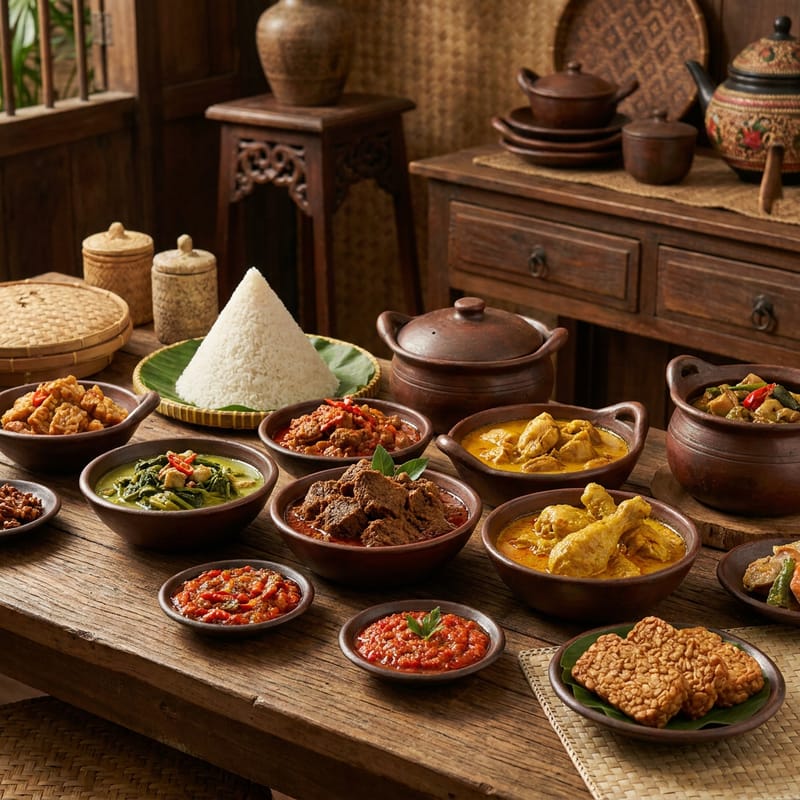
Nasi Padang is the meal format of West Sumatra: a small mound of rice surrounded by small plates of everything else — beef rendang, dendeng balado (crispy spicy beef), gulai tunjang (spicy tendon curry), ayam pop (chicken in coconut milk), gulai cubadak (unripe jackfruit curry), sambal ijo (green chili paste), and vegetable dishes. The Padang tradition is *bayar setelah makan* — pay after you eat — and the variety is the point. A proper Nasi Padang is a tour of Minangkabau cuisine on one tray.
Ingredients
Method
💡 Tips from the kitchen
- ·The secret of a great Nasi Padang is the variety — never fewer than 5 side dishes.
- ·Eat with your right hand if you can. Padang tradition is to mix the rice with a bit of each dish using your fingers.
- ·The sambal is the soul. Don't skip the green chili sambal.
The story
Cultural
🌺
What it means
The most influential Indonesian food format globally — adapted by Indonesian restaurants worldwide. Symbol of Minang entrepreneurship and the diaspora's connection to home. Featured in every guidebook about Indonesian food.
Across the archipelago
Nasi Padang Pariaman (coastal, gulai-heavy), Nasi Padang Bukittinggi (inland, rendang-heavy), Nasi Kapau (a different Minang style from the Kapau market, with a different presentation). Modern *padang fusion* exists in Jakarta with portions optimized for office workers.
🍽️ Pairs with
- ·Es teh manis (mandatory)
- ·Kerupuk merah (red crackers)
- ·Air jeruk (lime juice)
🥢 How to eat it
Don't try to finish everything — only pay for what's eaten. Try a small amount of everything. The 'gado-gado' Padang style is acceptable for first-timers: rendang, gulai, sambal, and vegetables. More adventurous eaters should try *gulai tunjang* (tendon) and *dendeng balado*.
Did you know?
🇮🇩 Indonesia has 17,000+ islands — only 6,000 are inhabited.
Cook it yourself
Nasi Padang is one of Indonesia's heritage dishes. Want to try the recipe at home?
See the recipe →