Gado-Gado
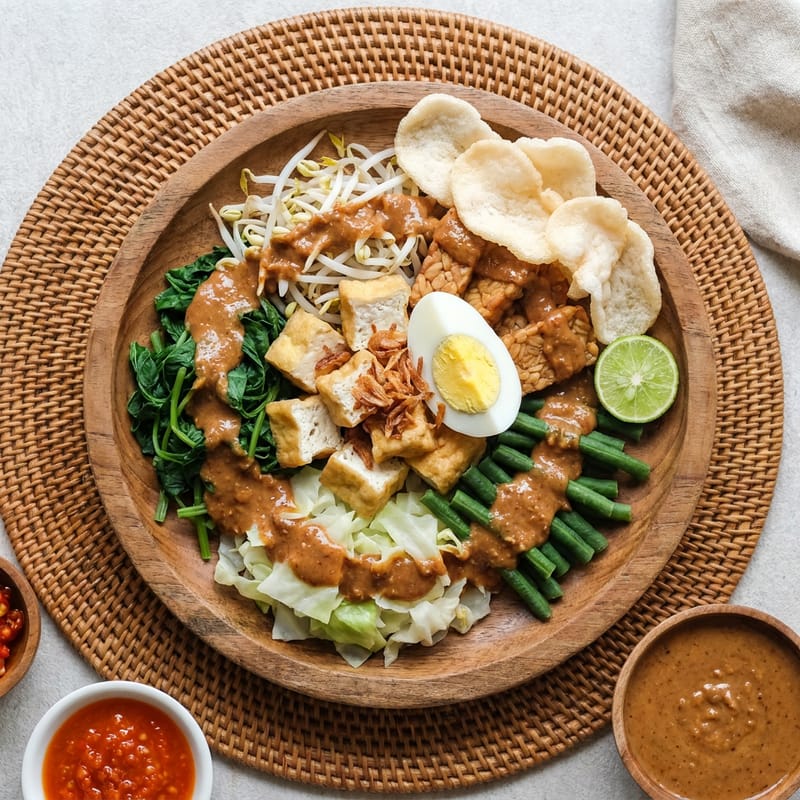
Gado-Gado
The recipe
Gado-gado is Indonesia's answer to the composed salad: blanched and steamed vegetables — long beans, bean sprouts, cabbage, spinach, kangkung (water spinach), bitter melon, and pok choy — arranged on a plate, topped with hard-boiled egg, fried tofu, fried tempeh, and lontong (compressed rice cake), then drowned in a sauce of peanuts, palm sugar, chilies, tamarind, and galangal. The name literally means 'mix-mix' — and that's exactly what you do at the table. The peanut sauce is the heart of the dish, and every region makes it slightly differently: Javanese versions are sweeter, Betawi versions are tangier.
Ingredients
Method
💡 Tips from the kitchen
- ·Buy peanuts already roasted and skinless. If you can only find raw, toast them in a dry pan for 5 minutes then rub off the skins.
- ·Make the sauce ahead — it keeps 5 days in the fridge. Add a splash of water when reheating to loosen.
- ·Want it spicier? Add more raw bird's eye chilies to the blender.
The story
Cultural
🌺
What it means
The signature dish of the Betawi people. Often called Indonesia's national salad. Served at kenduri, weddings, and office lunches. Represents the multicultural history of Jakarta itself.
Across the archipelago
Gado-Gado Jakarta (the standard, with lontong and egg), Gado-Gado Jawa (uses different vegetables, less sauce), Lotek (a Sundanese version with even more peanut sauce), Karedok (raw-vegetable version from West Java, the most adventurous form).
🍽️ Pairs with
- ·Kerupuk udang
- ·Emping (melinjo crackers)
- ·Es teh manis
🥢 How to eat it
Mix everything together — the peanut sauce should coat every vegetable. Add more sambal if you want heat. The lontong (rice cake) is a must — it absorbs the sauce beautifully.
Did you know?
🇮🇩 Indonesia has 17,000+ islands — only 6,000 are inhabited.
Cook it yourself
Gado-Gado is one of Indonesia's heritage dishes. Want to try the recipe at home?
See the recipe →